Book
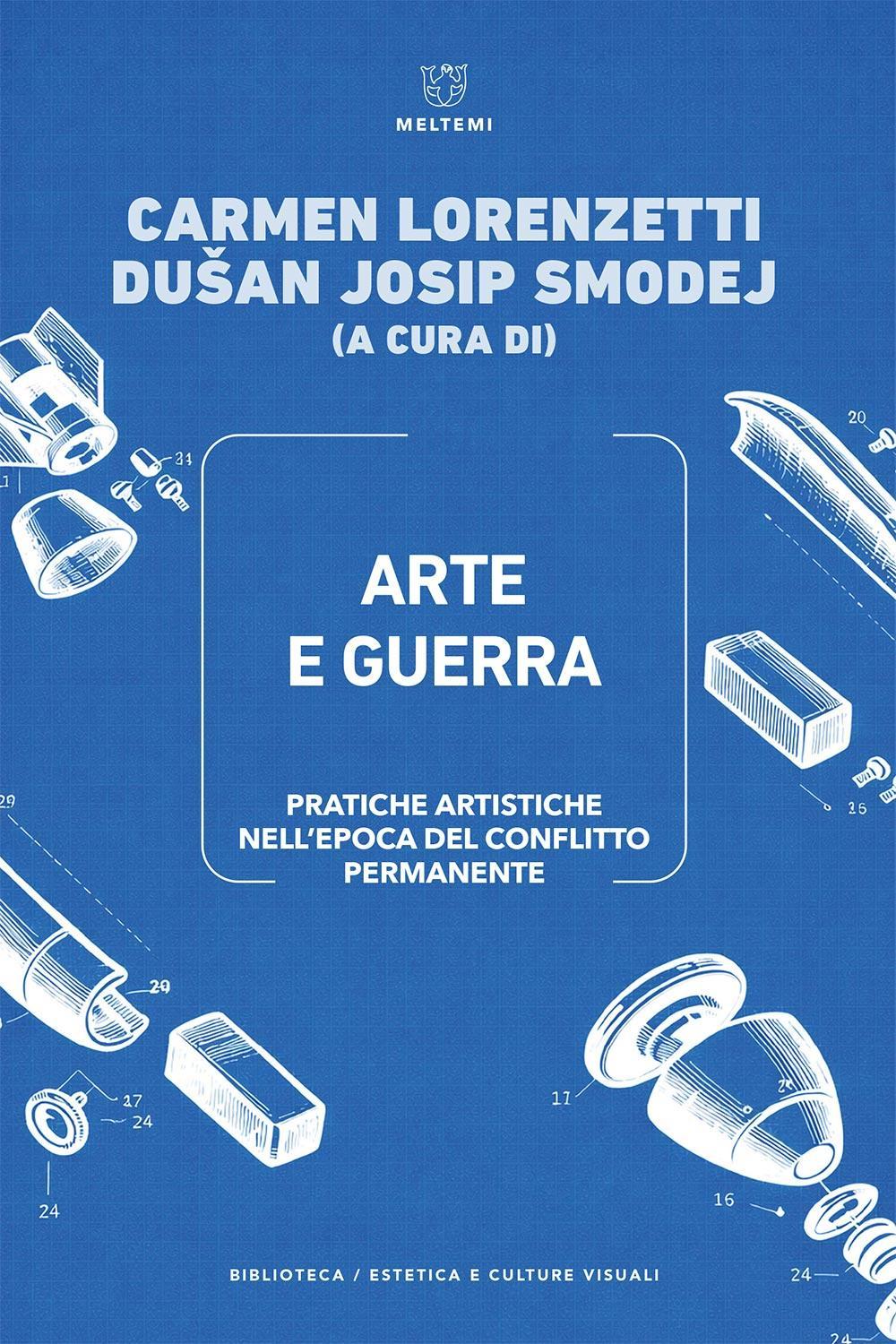
Art and War: Artistic Practices in the Age of Permanent Conflict
- Year
- 2026
- Role
- Co-editor with Carmen Lorenzetti
- Context
- Stefano Righetti, Mohammad Salemy, Maurizio Guerri, Pasquale Fameli, Cristiana Natali, Stefano Cagol, Anti-Denialist Coalition, Reza Negarestani, Kateryna Iakovlenko, Omar Chennafi, Maurizio Coccia
- Location
- Meltemi Editore, Milano, Italy
To walk into a war museum today is to step into a hush that pretends the guns have fallen silent. Glass vitrines, flags, medals, didactic panels; a climate-controlled calm that sits uneasily over a continent where war has once again become daily news. Outside, screens deliver a rolling cascade of images from Ukraine, Gaza, Sudan and countless other sites of conflict. Inside, the remnants of earlier wars have settled into the status of history. The museum becomes a device in which time is frozen and held outside the flux of events, not unlike a cemetery, and the contrast is sharper when time outside is moving fast and dangerously, when real lives are being lost in their hundreds of thousands. The room is quiet. The air is cool. The bombs are elsewhere.
It is precisely this disjunction that the curatorial project entitled On Dropping Bomb*shells have tried to hold open. The project began from a simple idiom — “to drop a bombshell” — and from the decision to take it literally, then bend it back toward its figurative use. The bomb is an explosion, a technique of killing and intimidation. A bombshell is also an announcement, a revelation timed for maximum shock. Between the two sits a whole apparatus of staging, mediation and memory. Who is allowed to speak as they drop their bombshell, and who is silenced. Who lives with unexploded munitions in their soil, and who experiences conflict only as a distant feed. Who gets monuments and anniversaries, and who is folded into statistical abstractions. On Dropping Bomb*shells insists on attending to those anonymous lives, bringing their existential problems back out of the smokescreen of proliferating images that risk producing only apathy. This book is a catalogue for those exhibitions only in a limited sense. It does not simply document what was shown, nor does it claim to fix the meaning of the works. Instead, it treats the exhibitions as starting points from which to “explode” a series of views on war: to pull apart their elements, to follow their trajectories into philosophy, anthropology, media theory, art history and curatorial reflection, then to set these fragments into new constellations. The bomb here is analytical as well as lethal. To explode a view is to dismantle the illusion of a single, indisputable picture of war.